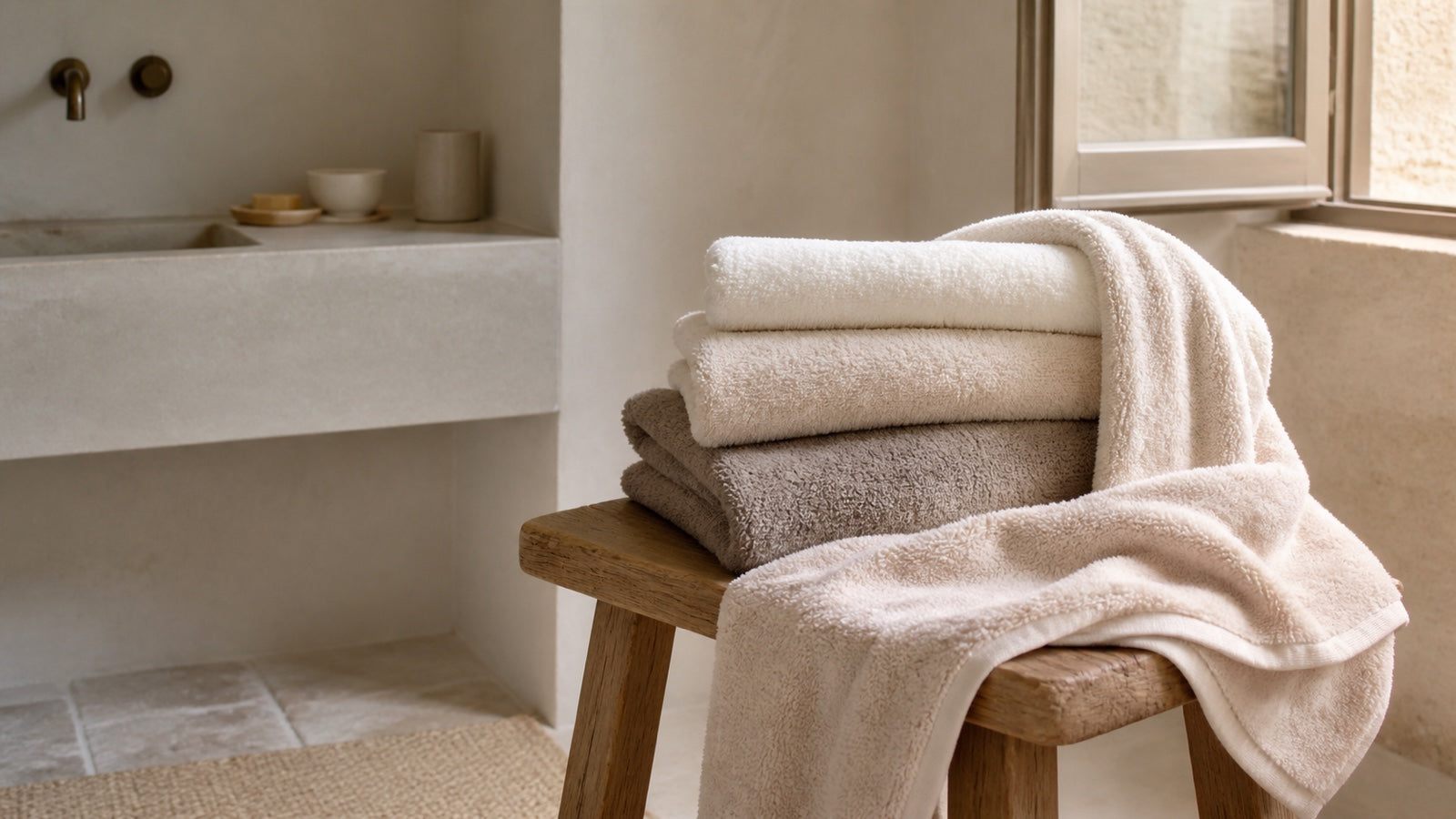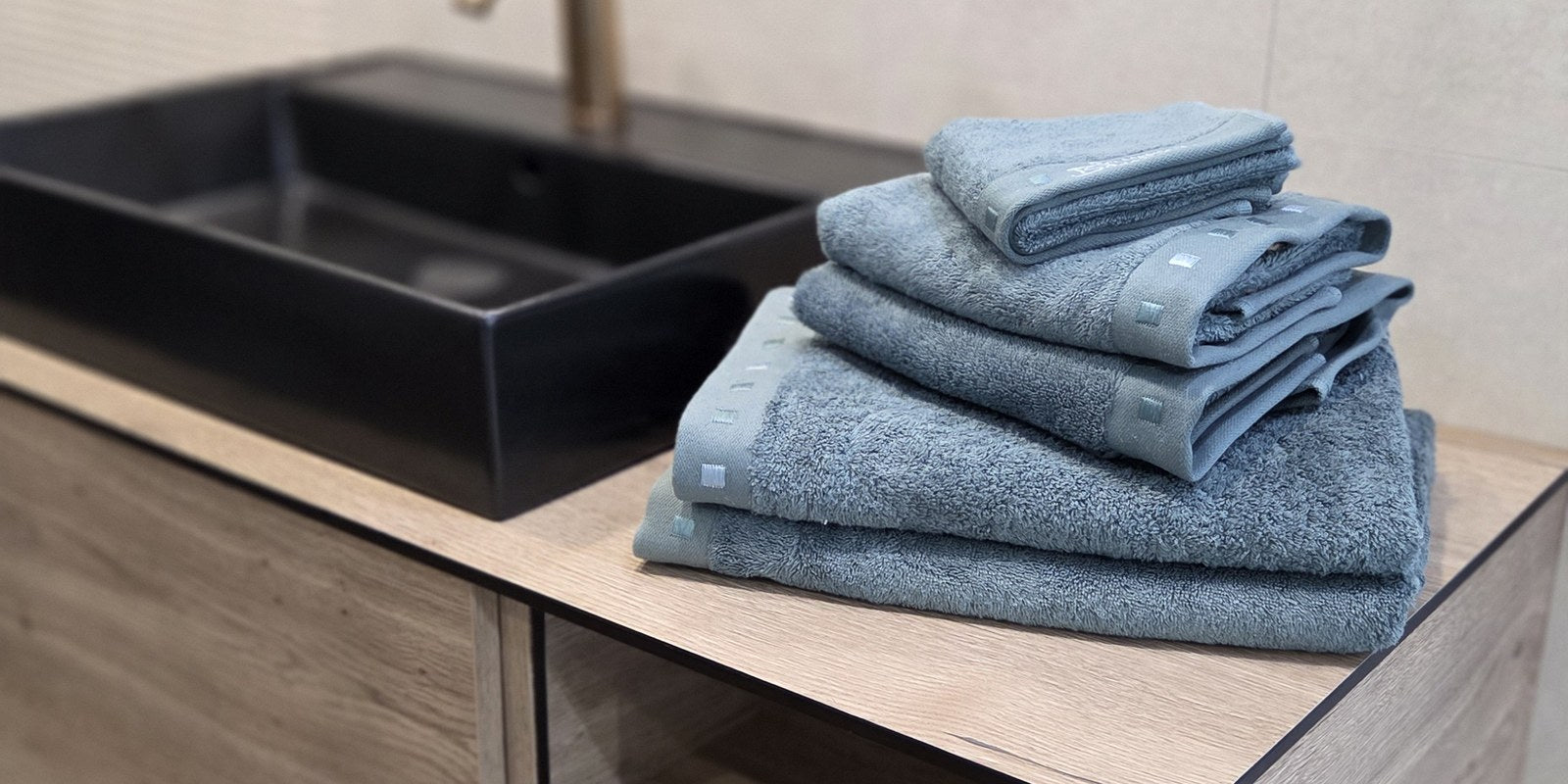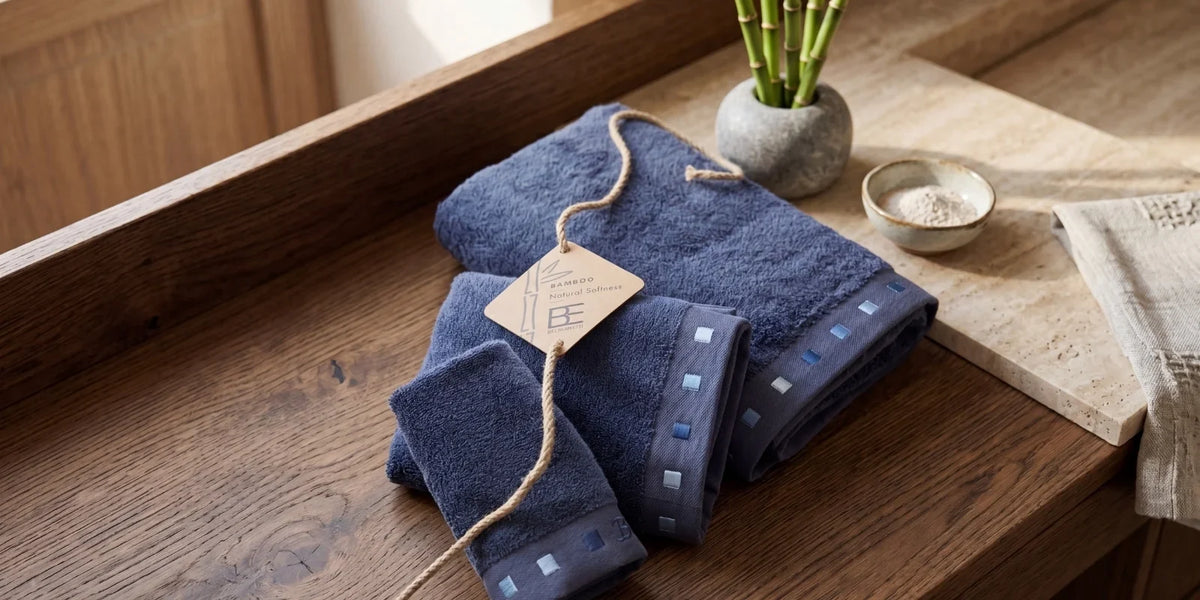
How Often Should You Actually Wash Your Towels?
Search this question and you will be told almost anything. Every day. Once a week. After two uses, after three, after four. Some of the advice comes from hygiene researchers, some from laundry brands with something to sell, and quite a lot of it from people guessing confidently.
So here is a straight answer, and then the part that actually matters more than the number.
The short answer. Wash a bath towel after about three uses, which for most people means roughly twice a week. Hand towels need it more often, every two days or so, because more people touch them and they rarely dry fully. Face cloths and gym towels go in after every single use. But the frequency matters less than one habit: a towel that dries completely between uses stays fresh far longer than one that does not.
How often should you wash each kind of towel?
Different towels live different lives. A bath towel dries a clean body and then hangs for twelve hours. A hand towel gets touched twenty times a day and never really dries. Treating them the same is why one of them always smells first.
| Towel | Wash after | Why |
|---|---|---|
| Bath towel | 3 uses | Dries a clean body, then has hours to dry itself. |
| Hand towel | Every 2 days | Constant use, shared, never fully dry. |
| Face cloth | Every use | Small, stays damp, used on skin. |
| Gym or swim towel | Every use | Goes home wet in a closed bag. No debate here. |
| Bath mat | Weekly | Wet feet, floor contact, slow to dry. |
| Bathrobe | Every 2 to 3 weeks | Worn over clean skin, and usually hung with air around it. |
If you shower twice a day, or you live somewhere humid, move everything one step sooner. These are starting points, not rules.
Why drying matters more than the number
A towel does not go off because it has been used a certain number of times. It goes off because it stayed damp.
Moisture is what lets the microbes already living on your skin and in the bathroom multiply. Give a towel eight hours of good airflow and very little happens. Leave it bunched on a hook, or folded in half over a narrow rail, and the inside of that fold stays wet until the next shower. That towel is worse after two uses than a properly dried one is after four.
Which is why the single most useful change is not washing more. It is hanging differently.
Spread the towel out. A rail beats a hook, because a hook gathers the fabric into a damp bundle at the middle. If you only have hooks, fold the towel lengthways once and hang it so both halves fall free rather than pressing against each other. Give it room from the next towel. And if two people share one rail, accept that you need two rails.


Does the bathroom itself change the answer?
Yes, more than most guides admit. A bathroom with an openable window and a working extractor fan is a different environment from an interior bathroom with neither.
In a poorly ventilated room, a towel can still be faintly damp twelve hours later. In that case, either wash more often, or move the towel somewhere it can actually dry. Plenty of people in small flats keep the bath towel on a hallway rail rather than in the bathroom, and it works.
The nose is a reliable instrument here. If a dry towel has any smell at all before you use it, it needed washing yesterday. That faint mustiness is the signal, not the visible state of the fabric.
Do thicker towels need washing more often?
Not more often, no. But here is the part a towel brand is not supposed to say.
A very heavy hotel-style towel holds more water, and in a small bathroom it dries much more slowly. So while it does not need washing sooner in theory, in practice it is far more likely to still be damp when you next reach for it. The plushest towel in the shop can be the worst choice for the room it is going into.
This is one reason our own bath towel is built around a balanced weight rather than the heaviest possible construction. Softness you can feel, without a towel that takes two days to dry on a radiator in February. If you want the longer version of that argument, we made it in our comparison of bamboo and cotton towels.
How should you wash them?
Briefly, because we have written about this at length elsewhere. Wash at 40 °C for everyday loads and save 60 °C for occasional deeper cleaning, where the care label allows it. Measure the detergent rather than pouring by habit. Leave the drum about three quarters full so the towels can move. Skip fabric conditioner, which coats the loops and reduces the very absorbency you are paying for.
And do not leave the finished load sitting in the machine. An hour of wet towels in a closed drum undoes the whole wash.
The full version, including how to rescue towels that have already gone stiff, is here: why towels turn hard, and how to make them soft again.
Two towels per person, in rotation, is the setup that works. One in use, one clean and dry. It sounds obvious, and almost nobody actually does it.
How many towels do you actually need?
For one person: two bath towels, two hand towels, two face cloths, one bath mat. That covers a full rotation with one set always clean, and it is enough that nothing ever has to be reused while damp.
For a household of two sharing a bathroom, double the bath towels and hand towels but not necessarily the mat. Guest towels are a separate question, and the honest answer is that two spare bath towels kept in a cupboard is plenty for most homes.
Buying more than that does not make the laundry easier. It just delays it.
The Belmanetti Journal
Occasional letters on textiles, care and quiet design. Written to be useful, not to sell you something. Unsubscribe whenever you like.
Frequently asked questions
Is it bad to use a towel for a week?
It is not dangerous for a healthy person using their own towel, but a towel used for a week in a humid bathroom will usually smell, and it will feel less absorbent because it never fully dries. If it is dry and odourless before each use, you have more room than the rules suggest.
Should everyone in the house have their own towel?
Yes. Not because of anything dramatic, but because a shared towel is used more often and gets less drying time between uses. Separate towels are the easiest hygiene improvement in any bathroom, and it costs nothing but a second hook.
Can you wash towels with clothes?
Better not to. Towels shed lint onto everything else, and garments with zips, hooks and rough fastenings can pull the terry loops. Wash towels with towels and similar textiles.
What temperature kills what is on a towel?
Higher temperatures do more, but constant 60 °C washing shortens the life of the fibres noticeably. For a healthy household, 40 °C with a correct detergent dose and proper drying is enough. Save 60 °C for when someone has been ill, and only where the care label permits.
Why does my towel smell even though I washed it?
Usually because it sat damp somewhere: in the machine after the cycle, in a laundry basket, or folded before it was completely dry. Build-up from too much detergent or fabric conditioner can hold odour too. We covered the full fix separately.
How often should a bathrobe be washed?
Every two to three weeks for normal use, since a robe is worn over clean skin and usually hangs with air around it. Wash sooner if it is worn over damp skin every day, or if it starts to feel heavy at the cuffs and hem.
The part worth remembering
Three uses for a bath towel is a good default. Two days for a hand towel. Every use for anything small or sweaty.
But if you only change one thing after reading this, make it the hanging. Spread the towel out, give it air, and let it dry all the way through. That single habit does more for how a towel feels and smells than any washing schedule.
Belmanetti is a European bathrobe and towel brand, part of a textile business operating since 1997. Our towels are designed in Europe and woven in Turkey. The advice here is general guidance. The care label on your individual textile always takes precedence, and anyone with a specific skin or health concern should follow their own clinician's advice.